Friday, April 30, 2010

What was the 12th Century Renaissance?


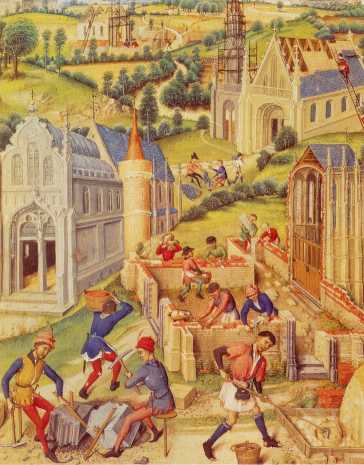
The twelfth century renaissance was a spread of monasticism and an increase in literacy. It is known as an internationalist movement. There were "wandering scholars". They were scholars who traveled from country to country. There were many social, political, and economic transformations. There were many philosophers who had an impact on this renaissance and they wrote a lot about theology. There were big changes in architecture. They developed the Gothic architecture from Romanesque architecture. In the twelfth renaissance many of the things paved the way into the Italian Renaissance.

source:
e Twelfth Century Renaissance." University of Wisconsin - History Department. Web. 01 May 2010. http://history.wisc.edu/sommerville/123/123%20112%20renaissance.htm

What do you 'think'? How did people of different classes 'think' differently?


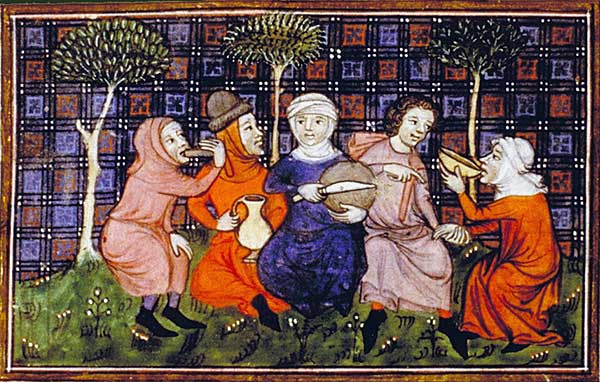
In the middle ages there were four different groups. There were the knights, the merchants, the nuns, and the peasants. Since they were all raised differently and had different roles in life they probably thought differently about things. So each group might think differently about the same exact thing. Even today people in everyday life will think differently about the same thing. That is why people argue and it is also what makes people different. These four groups all had different opinions on things because of the way that they lived their life.
One group in Middle Ages were the knights. Knights are” a man, usually of noble birth, who after an apprenticeship as page and squire was raised to honorable military rank and bound to chivalrous conduct.” (http://dictionary.reference.com/browse/knights) They lived in castles because they were always in a constant threat of war. The knights were more of wealthy people since they had to protect the king. Since they were wealthy they thought differently about things that people that were not as wealthy would think. The knights had servants cook for them and work for them. They probably did not think of anything being wrong with it and they probably thought the servants did not care. The servants probably thought they were not being treated right and that it wasn’t fair to them. Also the knights might think of going in to war is not as dangerous as the people who were not knights thought. The reasons for these people thinking different things is just because they were raised differently and their daily life is completely different from each others. (http://www.mnsu.edu/emuseum/history/middleages/knight.html)
Another group of the middle ages are the peasants. Peasants are “a member of a class of persons, as in Europe, Asia, and Latin America, who are small farmers or farm laborers of low social rank.” (http://dictionary.reference.com/browse/peasant)


The peasants usually lived on a manor. They worked for the lords and had to do pretty much anything the lords told them to. But the way that the peasants thought about this kind of treatment was not too bad. They respected the lords and since this was their daily life they were used to it. Also the lord didn’t think much of making the peasants do work for him. He didn’t see anything wrong with it. If the lords and the peasants were to switch places there would probably be a lot of problems. Since both of these groups thought a lot differently they would probably have a hard time being in each other’s shoes. The lords would not want to do everything the peasants tells them to do and the peasants would probably not order the lords to do everything just because it is not in their nature. (http://www.mnsu.edu/emuseum/history/middleages/peasant.html)
Another middle age group are the merchants. Merchants are “a person who buys and sells commodities for profit; dealer; trader.” (http://dictionary.reference.com/browse/merchant) The merchants lived in towns and they had to pay taxes to the lords. That is about all they had to give to the lords. Their lives were probably pretty normal and the closest to our lives today. They would own their shops and make things to sell to other people. They probably thought in a more creative way than other groups. They were able to think up of much better inventions than a peasant or a lord might think of. (http://www.mnsu.edu/emuseum/history/middleages/merchant.html)
Nuns were also a middle age group. Nuns are “a woman member of a religious order, esp. one bound by vows of poverty, chastity, and obedience.” (http://dictionary.reference.com/browse/nun) Nuns would devote themselves to a holy life. They lived in nunneries and promised to live a single life. They worshiped God a lot and prayed to him a lot. They would also go to a lot of church services. They thought of God in a much different way than the other groups did. They out him above all else and worshiped him all the time. Their whole life was just around God. The other groups had other things to do and also worshiped other things. (http://www.mnsu.edu/emuseum/history/middleages/nun.html)
All the groups thought differently about things because of the way they were raised and the kind of life they lived. The same thing happens today in America. Different religious groups think differently about God. There are also arguments today about people thinking differently about something. It is just a fact of life that we all think differently. That is what makes up part of our personality.

sources:
Works Cited
Dictionary.com | Find the Meanings and Definitions of Words at Dictionary.com. Web. 01 May 2010. http://dictionary.reference.com/
"The Knight's Realm." Web. 01 May 2010. http://www.mnsu.edu/emuseum/history/middleages/knight.html
"The Merchant's Realm." Web. 01 May 2010. http://www.mnsu.edu/emuseum/history/middleages/merchant.html
"The Nun's Realm." Web. 01 May 2010. http://www.mnsu.edu/emuseum/history/middleages/nun.html
"The Peasant's Realm." Web. 01 May 2010. http://www.mnsu.edu/emuseum/history/middleages/peasant.html

Animoto Videos

Create your own video slideshow at animoto.com.


Create your own video slideshow at animoto.com.


Create your own video slideshow at animoto.com.

Monday, April 26, 2010

Find examples of French Gothic influence on British architecture.

In the French Gothic Architecture and the British architecture they both have arches in the ceilings inside the church.


The French Gothic architecture had the stained glass window and that stayed in the British architecture.


The French Gothic Architecture had a point at the very top and it influenced the British architecture because the British architecture also had the point at the top.

photos from wikimedia commons


Saturday, April 24, 2010

Medieval Times Notes

  1. The Normans brought Christianity with them to England and converted the Anglo-Saxons and the Irish
  2. The Feudal system- social system in Europe. They were not equal and people were above other people
  3. People were born into a class and that is how you would stay for the rest of your life
  4. They believed in many monsters.
  5. They believed in dog heads, fish man, and different monsters
  6. They had fear of the unknown
  7. They thought the world was ending and judgment was upon them
  8. The value of your life was depended on what class you were in
  9. The peasants were servants and had to work on their lord's land and would get punished if they tried to escape. They could also be sold

Review Notes

  1. Mesopotamia
    • Ziggurat is a Sumerian temple
    • In the old testament account of genesis Eden is its own place in Mesopotamia
    • Mesopotamia- cradle of civilization
    • First writing system and first mathematic, first law, monumental architecture
  2. Egypt
    • Egypt was a death obsessed culture
    • The pyramids were tombs
    • Egyptians believed in the life force name ka
    • They believed when you die it is essential to prepare the body so the ka could leave the body and call it when it is ready.
    • When the ka leaves the body it does not go right to the afterlife it has to hang around in the tomb
    • When the ka is called to the after life it has to sit in the judgment where the heart is weighed against a feather. If it is lighter than a feather then your soul is destroyed and there is no after life.
    • It was the job of the pharaoh to make sure it rained enough
    • The geography of Egypt is there is dessert then green land and then the river
    • The pharaoh becomes a symbol or god for making sure that the cycle happens over and over again of the river flooding
  3. Ancient Greece
    • Minoans- king Minos. Lived on Crete.
    • The Minoans ended when a nearby island had a volcanic eruption it caused tsunamis to hit Crete and the gasses alter the climate a lot and it had a failure of their harvest and they could not survive.
    • There are many ways that culture can collapse
    • Misonian culture- Greeks of the Trojan war
    • People think of whether the war actually happened and there are many theories about it
    • After the Trojan war Greece goes into the dark ages
    • Polis is Greek for city-state
  4. Persian wars
    • if the Greeks lose Athens then everything we know about European doesn't happen. And there is no north American civilization
    • Then Athens becomes a huge power
    • Meanwhile Sparta is gaining strength
    • They start to fight

Friday, April 23, 2010

What's So Wrong With Social Orders?


Social orders were a very bad thing, they caused problems and they were very unfair. Social orders are,” a concept used in sociology, history and other social sciences. It refers to a set of linked social structures, social institutions and social practices which conserve, maintain and enforce "normal" ways of relating and behaving.” (http://en.wikipedia.org/wiki/Social_order) In the middle ages the social orders were terrible and it was very unfair to the people.
The social orders in the middle ages were unfair but also uncontrollable to the people. When you were born you were born into a specific class and you had no control over it. So you could be born into a peasant family and you would be a peasant for the rest of your life. If you were born into an upper class family you would always be in the upper class. In the middle ages there was also feudalism. Feudalism is “a social system based on a society in which peasant agriculture is the fundamental productive activity; in which slavery is non-existent or marginal but peasants are tied to the land in some way; and in which a small elite defined by military activity dominates.” (http://www.fordham.edu/halsall/sbook1i.html) Feudalism was unfair to the people and it made the people in the lower class angry.
In the feudal system there was the upper class and the lower class. The upper class had control over all the lower class. The upper class was more of the kings and nobles. The lower class were the peasants and the serfs. They were born into their class so no matter what they did they would never move up to the upper class. These social orders were discriminating because it was not fair to the lower class people. The lower class was much bigger than the upper class. The peasants were about ninety percent of the population of the middle ages. The peasants weren’t slaves but they were pretty much treated like that. They could even be sold. They would also be punished terribly of they did something wrong. It was terrible to be born into a lower class family. (http://library.thinkquest.org/10949/fief/hifeudal.html)
There were three orders in medieval society. These three orders were those who work, those who fight, and those who pray. Those who work were the serfs, peasants, and slaves. They would work on their lord’s land. They didn’t travel much farther than the estate that their lord lived on. Most serfs were not free but eventually when the economy was changing more and more serfs started to become free, but a lot of them were still not free. Those who fight were the medieval nobility. They had to protect the weak and poor. They also had to conduct chivalry. The members of nobility were free but they still had some limitations. They had military obligation to their lord. Those who pray were the clergy. They were at the top of the medieval society. The village priest had to administer the sacraments. There were also many monks. These social orders were a bad thing because it was extremely unfair to the people who worked because they would do a lot of work and not have as much money as the people who fight who did not have to work but still had more money. (http://www.historyguide.org/ancient/lecture23b.html)
Overall social orders were a bad thing which also led to the peasant revolt. It was very unfair to the lower people because they probably worked harder than the upper class people but they got much less in return. All of the different parts of social orders were bad in the middle ages.

sources:
Centuries, 12th. "Lecture 23: Medieval Society: The Three Orders." The History Guide -- Main. Web. 25 Apr. 2010. http://www.historyguide.org/ancient/lecture23b.html
"Medieval Sourcebook: Crisis, Recovery, Feudalism?" FORDHAM.EDU. Web. 25 Apr. 2010. http://www.fordham.edu/halsall/sbook1i.html
"THE MIDDLE AGES: THE FEUDAL SYSTEM." Oracle ThinkQuest Library. Web. 25 Apr. 2010. http://library.thinkquest.org/10949/fief/hifeudal.html
"Social Order." Wikipedia, the Free Encyclopedia. Web. 25 Apr. 2010. http://en.wikipedia.org/wiki/Social_order